
Introduction
Flying on a private jet is very different from traveling on a commercial airline. Instead of long security lines, crowded terminals, and fixed schedules, private aviation offers flexibility, comfort, privacy, and personalized service. For many people, however, their first private jet experience can feel unfamiliar. Questions about what to wear, when to arrive, how to interact with the crew, and what is considered appropriate behavior are common.
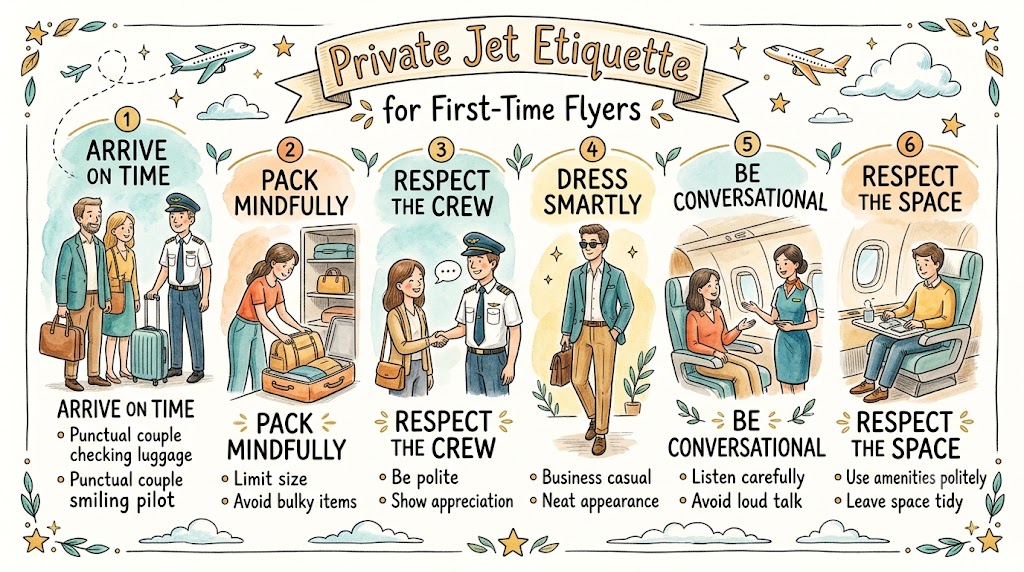
Understanding private jet etiquette helps first-time flyers enjoy the experience with confidence while showing respect for the aircraft, crew, and fellow passengers. Whether you are traveling for business, a family vacation, a special event, or a luxury getaway, knowing the basic expectations makes the journey smoother and more enjoyable.
This guide explains everything first-time private jet travelers should know before stepping aboard, from pre-flight preparation to arrival at the destination.
Why Private Jet Travel Feels Different
Private aviation focuses on convenience, exclusivity, and personalized service. Unlike commercial airlines, every journey is designed around the passengers rather than the airline schedule.
Some of the biggest differences include:
- Smaller private terminals (FBOs)
- Minimal waiting times
- Flexible departure schedules
- Personalized flight services
- Luxury seating and spacious cabins
- Greater privacy
- Direct communication with flight staff
- Customized catering options
These advantages also come with a greater expectation of professionalism and courtesy from passengers.
Preparing Before Your Flight
Good etiquette starts well before arriving at the airport.
Confirm Your Travel Details
Double-check:
- Flight time
- Departure terminal or FBO
- Passenger list
- Identification requirements
- Luggage allowance
Having everything organized prevents delays and helps the charter operator provide a seamless experience.
Arrive on Time
One of the biggest benefits of private aviation is reduced waiting time.
Most charter operators recommend arriving:
- 20–30 minutes before departure for domestic flights
- 45–60 minutes before international departures
Arriving much earlier usually isn’t necessary, while arriving late may delay the entire flight.
Carry Valid Identification
Even though security procedures are generally quicker than commercial airports, identification is still required.
Bring:
- Passport (international flights)
- Government-issued photo ID
- Required visas if applicable
Inform the Charter Company About Special Requests
If you have:
- Food allergies
- Medical conditions
- Mobility assistance requirements
- Traveling pets
- Children needing special arrangements
Inform the operator before departure.
Early communication helps ensure personalized service.
Dress Appropriately
Private jet travel does not usually have a formal dress code, but appearance still matters.
Business Travelers
Suitable clothing includes:
- Business suits
- Blazers
- Formal shirts
- Smart dresses
Leisure Travelers
Comfortable yet stylish clothing works well.
Examples include:
- Polo shirts
- Premium jeans
- Smart casual outfits
- Clean sneakers
- Comfortable travel wear
Avoid
- Dirty clothing
- Torn garments
- Beachwear
- Offensive slogans
- Strong fragrances
Dressing appropriately demonstrates respect for both the crew and fellow passengers.
Respect the Flight Crew
Private aviation crews provide highly personalized service.
Good etiquette includes:
- Greeting the crew politely
- Listening carefully to safety instructions
- Speaking respectfully
- Asking questions courteously
- Thanking crew members before departure
Remember that even on luxury flights, safety remains the crew’s highest priority.
Boarding Etiquette
Private jet boarding is usually calm and efficient.
Follow these simple practices:
- Wait until invited to board.
- Allow luggage handlers to manage baggage.
- Avoid blocking the entrance.
- Enter the aircraft carefully.
- Follow seating guidance if provided.
Because private aircraft are smaller than commercial airliners, moving carefully inside the cabin is especially important.
Cabin Etiquette
Luxury aircraft feature premium interiors that require respectful use.
Good cabin etiquette includes:
Speak Softly
Conversations should remain at a comfortable volume.
Respect Privacy
Some passengers may want to work or relax quietly.
Avoid:
- Looking at laptops
- Reading confidential documents
- Interrupting business discussions
Keep the Cabin Clean
Dispose of:
- Cups
- Wrappers
- Napkins
Use designated storage areas for personal belongings.
Handle Luxury Interiors Carefully
Private aircraft often feature:
- Leather seating
- Premium wood finishes
- High-end entertainment systems
- Designer furnishings
Treat everything with care.
Follow Safety Instructions
Fasten seatbelts whenever instructed.
Even smooth flights may experience unexpected turbulence.
Food and Beverage Etiquette
Many private flights include customized catering.
To maintain a pleasant experience:
- Inform dietary preferences beforehand.
- Avoid wasting food.
- Use provided dining accessories.
- Keep your seating area clean.
- Consume alcohol responsibly.
Excessive drinking is never appropriate on private aircraft.
Business Travel Etiquette
Many charter flights serve as mobile offices.
If traveling for work:
- Keep conversations professional.
- Protect confidential information.
- Use headphones during video calls.
- Avoid disturbing others.
- Keep electronic devices organized.
Private aviation offers an excellent environment for productive travel when everyone respects shared space.
Traveling with Family or Children
Children are welcome on many charter flights.
Parents can help by:
- Bringing entertainment
- Explaining cabin rules
- Supervising younger children
- Keeping noise levels reasonable
- Following crew guidance
Well-prepared families contribute to a comfortable experience for everyone onboard.
Traveling with Pets
Many charter companies accommodate pets.
Before departure:
- Confirm pet policies.
- Carry health documents if required.
- Bring food and water.
- Use approved carriers when necessary.
- Keep pets under supervision.
Advance planning ensures a stress-free journey.
Photography and Social Media Etiquette
Private jets often inspire memorable photos.
However, good manners include:
- Asking permission before photographing others.
- Respecting passenger privacy.
- Avoiding photos of confidential business discussions.
- Following crew instructions.
- Thinking carefully before posting images online.
Not everyone wants their travel shared publicly.
Using Electronic Devices
Private aircraft usually offer advanced connectivity.
Passengers should:
- Silence notifications.
- Use headphones.
- Keep calls brief.
- Avoid loud speakerphone conversations.
- Follow crew guidance regarding device use during takeoff and landing.
Managing Luggage Properly
Private aircraft have luggage limits based on aircraft size.
Helpful tips include:
- Pack only what is needed.
- Label baggage clearly.
- Inform operators about oversized luggage.
- Follow luggage weight restrictions.
- Avoid prohibited items.
Planning luggage in advance helps avoid operational issues.
Respect Flight Schedules
Although private aviation offers flexibility, passengers should still respect agreed departure times.
Remember:
- Crew members work under regulated duty hours.
- Airport slot times may apply.
- Ground transportation is often scheduled.
- Other passengers may have important commitments.
Being punctual benefits everyone.
Arrival Etiquette
After landing:
- Remain seated until instructed.
- Gather belongings carefully.
- Thank the flight crew.
- Exit calmly.
- Follow ground staff directions.
Professional courtesy leaves a positive impression and concludes the journey on a high note.
Common Mistakes First-Time Private Jet Flyers Should Avoid
Many first-time travelers make avoidable mistakes.
Some of the most common include:
- Arriving late
- Bringing excessive luggage
- Ignoring safety briefings
- Wearing inappropriate clothing
- Assuming commercial airline rules always apply
- Drinking too much alcohol
- Speaking loudly
- Mishandling luxury interiors
- Taking photos without permission
- Forgetting required travel documents
Being aware of these issues helps create a smoother experience.
Benefits of Following Private Jet Etiquette
Practicing good etiquette offers many advantages.
Better Travel Experience
Respectful behavior creates a relaxed atmosphere for everyone.
Faster Boarding
Prepared passengers help maintain efficient departures.
Improved Comfort
Organized, considerate travelers enjoy a more pleasant cabin environment.
Enhanced Safety
Following crew instructions supports safe flight operations.
Positive Relationships
Professional behavior encourages excellent service and builds trust with charter providers.
Greater Privacy
Respecting confidentiality makes private aviation attractive for executives, celebrities, and business travelers alike.
Quick Private Jet Etiquette Checklist
Before Your Flight:
- Confirm booking details
- Carry valid identification
- Arrive on time
- Pack appropriately
- Notify special requests
During Boarding:
- Greet the crew
- Board calmly
- Respect luggage handling
During the Flight:
- Keep conversations polite
- Respect privacy
- Follow safety instructions
- Drink responsibly
- Keep the cabin clean
After Landing:
- Wait before disembarking
- Collect belongings
- Thank the crew
- Exit efficiently
Frequently Asked Questions
1. What should I wear on a private jet?
Smart casual or business attire is generally appropriate. Comfortable, clean, and well-presented clothing fits most private flights. Avoid overly casual outfits such as beachwear, clothing with offensive graphics, or excessively worn garments.
2. How early should I arrive?
Most private charter operators recommend arriving 20 to 30 minutes before departure for domestic flights. International journeys may require slightly more time depending on documentation requirements.
3. Can I bring pets on a private jet?
Many private charter flights are pet-friendly. Always inform the operator in advance so appropriate arrangements can be made, and carry any required health or travel documents for your pet.
4. Is tipping the crew expected?
Tipping policies vary by charter provider and region. While it is not always required, many passengers choose to tip the crew for exceptional service as a gesture of appreciation.
5. Can I take photos inside the aircraft?
Yes, but always respect the privacy of other passengers and crew members. Avoid photographing people or sensitive information without their permission.
6. Are luggage restrictions the same as commercial airlines?
No. Luggage limits depend on the aircraft model and available storage space. Confirm baggage allowances with your charter provider before packing.
7. Can I request special meals?
Yes. One of the advantages of private aviation is customized catering. Inform the charter company of dietary preferences or allergies before the flight.
8. Is Wi-Fi available?
Many modern private jets offer onboard Wi-Fi and connectivity services, though availability varies depending on the aircraft and route.
9. Can I work during the flight?
Absolutely. Private jets provide a quiet and comfortable environment that is ideal for meetings, phone calls, and focused work, provided fellow passengers’ comfort and privacy are respected.
10. How is private jet etiquette different from commercial airline etiquette?
Private aviation emphasizes personalized service, privacy, flexibility, and professionalism. While there are fewer passengers and less congestion, respectful behavior, punctuality, and consideration for the crew and fellow travelers are even more important.
Conclusion
Flying on a private jet is more than just a luxurious way to travel—it is an experience built on comfort, efficiency, privacy, and exceptional service. For first-time flyers, understanding proper etiquette can make the journey far more enjoyable while helping create a positive atmosphere for everyone on board.
Simple practices such as arriving on time, dressing appropriately, respecting the flight crew, maintaining cabin cleanliness, and being mindful of fellow passengers contribute to a seamless travel experience. Whether you are flying for business, leisure, or a special occasion, good manners enhance every aspect of private aviation.

