
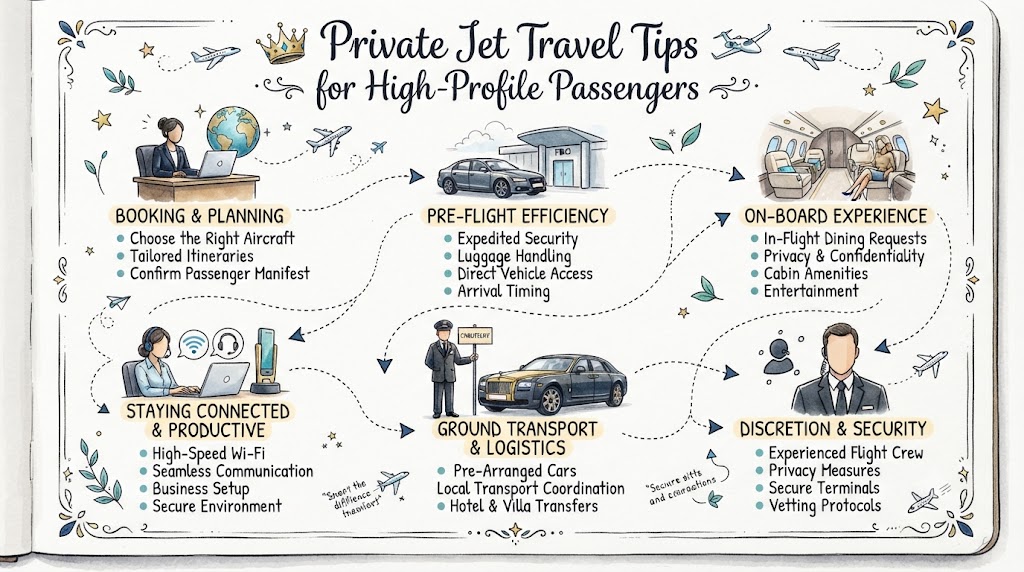
Introduction
For high-profile individuals, travel is often more than simply moving from one destination to another. Corporate executives attend important board meetings across multiple cities, celebrities travel for film productions and events, entrepreneurs meet investors around the world, and diplomats frequently operate on tight schedules. In these situations, privacy, security, flexibility, and efficiency become just as important as reaching the destination.
Commercial airline travel, while suitable for many travelers, may present challenges such as crowded terminals, fixed schedules, long security queues, limited privacy, and unpredictable delays. These factors can disrupt carefully planned itineraries and reduce productivity.
Private jet travel offers a different experience by allowing passengers to customize their journey according to their specific needs. From flexible departure times and private terminals to personalized onboard services and enhanced confidentiality, private aviation has become a preferred choice for many high-profile travelers.
Why High-Profile Travelers Choose Private Jets
Private aviation is designed to provide greater flexibility and control than scheduled commercial airline services. For passengers whose time and privacy are valuable, these advantages can make a significant difference.
Some of the most common users of private jet services include:
- Corporate executives
- Entrepreneurs
- Celebrities
- Professional athletes
- Government officials
- Family offices
- Business owners
- International investors
Private jet travel allows these travelers to plan flights around their schedules instead of adjusting plans to airline timetables.
It also creates a more private environment where confidential discussions, business planning, and personal travel can take place with fewer interruptions.
Benefits of Private Jet Travel for VIP Passengers
1. Enhanced Privacy
Privacy is often one of the primary reasons high-profile passengers choose private aviation.
Unlike commercial terminals, many private aviation facilities provide dedicated areas with limited public access. This reduces unnecessary attention and helps travelers move through airports more discreetly.
Onboard, passengers can discuss confidential business matters, prepare for meetings, or simply enjoy personal time in a private setting.
Benefits include:
- Private terminals
- Reduced public exposure
- Confidential conversations
- Controlled travel environment
2. Greater Security
Security planning is essential for many VIP travelers.
Private jet travel allows for greater coordination between passengers, operators, and security personnel.
Advantages may include:
- Controlled passenger access
- Smaller airport environments
- Personalized security arrangements
- Better coordination before arrival
These measures help create a more organized travel experience while reducing unnecessary exposure.
3. Flexible Flight Scheduling
Business opportunities and important events often require schedule changes at short notice.
Private jet travel offers greater flexibility by allowing departures to be planned around business priorities rather than commercial airline timetables.
Flexible scheduling supports:
- Early departures
- Late-evening meetings
- Multi-city business trips
- Last-minute itinerary adjustments
This flexibility allows executives to maximize valuable working time.
4. Increased Productivity
Private aircraft provide an environment where business can continue during the journey.
Passengers can use flight time to:
- Review presentations
- Conduct private meetings
- Participate in virtual conferences
- Prepare for negotiations
- Organize business strategies
Instead of losing productivity while traveling, executives can continue working efficiently.
5. Personalized Luxury Experience
Private aviation allows travelers to customize many aspects of their journey.
Depending on the aircraft and operator, passengers may request:
- Preferred catering
- Cabin configuration
- Business workspace
- Entertainment options
- Comfortable seating arrangements
These personalized services help create a travel experience tailored to individual needs.
Private Jet Travel Tips for High-Profile Passengers
Tip 1: Choose a Trusted Private Jet Operator
Selecting a reliable operator is one of the most important travel decisions.
When evaluating private jet providers, consider:
- Safety standards
- Operational experience
- Aircraft maintenance practices
- Customer service
- Professional reputation
Working with an experienced operator helps support a smoother travel experience.
Tip 2: Plan Your Itinerary Early
Although private aviation provides flexibility, early planning still offers advantages.
Preparing in advance allows time to coordinate:
- Flight schedules
- Airport slots
- Ground transportation
- International travel documentation
- Business meetings
Good planning reduces unnecessary travel complications.
Tip 3: Protect Personal Privacy
Confidentiality should remain a priority throughout the travel process.
High-profile passengers should:
- Share travel information only with essential personnel
- Avoid publicly discussing travel schedules
- Use secure communication methods
- Confirm privacy arrangements before departure
Careful planning helps reduce unnecessary attention.
Tip 4: Coordinate Ground Transportation
The journey does not end when the aircraft lands.
Ground transportation should be organized before arrival.
Consider arranging:
- Professional chauffeur services
- Secure vehicle transfers
- Hotel transportation
- Business meeting transportation
Smooth ground logistics help maintain schedule efficiency.
Tip 5: Prepare Important Travel Documents
International and domestic travel may require different documentation.
Passengers should verify:
- Identification documents
- Passports
- Visa requirements
- Customs documentation
- Destination-specific requirements
Preparing documents in advance helps avoid travel delays.
Tip 6: Communicate Special Requirements
Private aviation offers opportunities to customize the travel experience.
Passengers should inform the operator about:
- Dietary preferences
- Medical needs
- Business equipment
- Family travel
- Pet travel
- Accessibility requirements
Clear communication helps operators prepare appropriate services.
Tip 7: Prioritize Security Planning
Some travelers require additional security coordination.
Planning may include:
- Security personnel coordination
- Arrival privacy
- Airport access arrangements
- Destination planning
Security planning should match individual travel requirements.
Tip 8: Pack Efficiently
Efficient packing helps simplify the travel experience.
Recommended items include:
- Business documents
- Electronic devices
- Chargers
- Comfortable clothing
- Personal essentials
Packing according to the planned itinerary improves convenience.
Tip 9: Use Flight Time Productively
Private aviation provides an opportunity to maximize travel time.
Passengers can:
- Hold business discussions
- Review financial reports
- Prepare presentations
- Plan future meetings
- Relax before important events
Balancing work and rest helps travelers arrive prepared.
Tip 10: Understand Aircraft Options
Different aircraft categories are suitable for different travel requirements.
Light Jets
Suitable for:
- Regional travel
- Small executive groups
- Short business trips
Midsize Jets
Appropriate for:
- Medium-range travel
- Corporate teams
- Increased cabin comfort
Heavy Jets
Often selected for:
- Long-distance international travel
- Larger passenger groups
- Extended business trips
- Premium onboard amenities
Selecting an aircraft that matches the journey helps improve the overall travel experience.
Common Mistakes High-Profile Travelers Should Avoid
Sharing Travel Plans Publicly
Posting travel schedules on social media or discussing them publicly can reduce privacy.
Travel details should be shared only with trusted individuals involved in the journey.
Choosing Price Over Safety
Selecting an operator based only on price may overlook important considerations such as operational standards and service quality.
Safety and reliability should always remain priorities.
Ignoring Travel Documentation
Incomplete documentation can create delays during international travel.
Passengers should review all required documents before departure.
Poor Schedule Planning
Although private aviation offers flexibility, unrealistic schedules may still create unnecessary stress.
Allow sufficient time for meetings, transfers, and possible operational adjustments.
Forgetting Ground Logistics
Well-planned air travel should also include organized transportation after landing.
Coordinating transfers in advance improves travel efficiency.
Private Jet vs Commercial First-Class Travel
| Factor | Private Jet | Commercial First Class |
|---|---|---|
| Privacy | Exclusive cabin with minimal public exposure | Shared cabin with other passengers |
| Scheduling Flexibility | Customized departure and arrival times | Fixed airline schedules |
| Airport Experience | Private terminals and faster boarding | Standard airport procedures |
| Security | Personalized security coordination | General airport security process |
| Productivity | Quiet environment suitable for meetings and work | Limited privacy for confidential work |
| Personalization | Customized catering and onboard services | Standard airline offerings |
Essential Planning Checklist Before Every Private Jet Trip
Before departure, review this checklist:
- Confirm the flight itinerary
- Verify passports and identification documents
- Review visa and customs requirements if traveling internationally
- Coordinate ground transportation
- Confirm catering preferences
- Prepare business presentations or meeting materials
- Organize electronic devices and chargers
- Confirm security arrangements if required
- Review baggage requirements
- Check destination weather and local regulations
A simple checklist helps ensure that every stage of the journey runs smoothly.
How Technology Is Improving VIP Private Aviation
Technology is transforming private aviation by making travel more convenient, secure, and personalized.
Digital Booking Platforms
Modern booking platforms simplify aircraft selection, itinerary management, and communication with operators.
Secure Communication
Encrypted communication systems help protect sensitive travel information and confidential business discussions.
Real-Time Flight Tracking
Passengers and support teams can receive real-time updates about aircraft location, estimated arrival times, and operational changes.
Personalized Passenger Services
Many operators maintain passenger preference profiles that include catering choices, seating preferences, and cabin configurations, allowing a more personalized travel experience.
Paperless Travel Documentation
Digital travel documents reduce paperwork and make international travel preparation more efficient.
Best Practices for First-Time High-Profile Private Jet Travelers
If this is your first experience flying on a private jet, consider these practical recommendations:
Understand the Flight Process
Private aviation procedures differ from commercial airlines. Travelers generally arrive closer to departure time and use private terminals that offer faster check-in and boarding.
Communicate Clearly with Your Charter Provider
Inform your provider about any schedule changes, dietary needs, luggage requirements, or special requests as early as possible.
Dress Comfortably Yet Professionally
Business travelers often choose attire that is comfortable during the flight while remaining appropriate for meetings immediately after landing.
Stay Connected
Most modern private jets offer communication options that allow passengers to continue working throughout the journey, depending on the aircraft configuration and available services.
Respect Safety Procedures
Even though private aviation offers a relaxed environment, passengers should always follow crew instructions and applicable safety procedures.
Frequently Asked Questions
1. Why do high-profile passengers prefer private jets?
Private jets provide greater privacy, flexibility, security, and convenience compared with commercial airline travel.
2. How do private jets improve passenger privacy?
Private terminals, controlled boarding, and exclusive cabins reduce public exposure and create a more confidential travel environment.
3. Are private jet terminals more secure?
Private aviation facilities often provide controlled access and more personalized coordination, although security procedures vary by airport and operator.
4. Can private jet schedules be changed at short notice?
Private aviation generally offers greater scheduling flexibility than commercial airlines, subject to operational requirements and airport availability.
5. What documents are needed for private jet travel?
Requirements depend on the destination but may include government-issued identification, passports, visas, and customs documentation.
6. How do VIP travelers maintain confidentiality?
They typically limit the sharing of travel details, use secure communication, and coordinate closely with trusted travel professionals.
7. What services are available on private jets?
Available services vary but may include customized catering, business workspaces, entertainment options, premium seating, and personalized cabin arrangements.
8. Which type of private jet is best for business travel?
The ideal aircraft depends on passenger numbers, travel distance, schedule, luggage requirements, and operational needs.
9. Can private jets accommodate special travel requests?
Many operators can arrange customized services such as dietary accommodations, business equipment, family travel needs, accessibility assistance, and pet transportation.
10. How should first-time VIP travelers prepare for private jet travel?
Plan your itinerary early, organize all travel documents, communicate special requests in advance, coordinate ground transportation, and choose a trusted private jet operator.
Conclusion
Private jet travel offers high-profile passengers far more than luxury. It provides a secure, flexible, and highly efficient travel solution that supports productivity, confidentiality, comfort, and personalized service. Whether traveling for executive meetings, international business, entertainment events, diplomatic engagements, or family travel, private aviation allows passengers to focus on their priorities instead of travel-related challenges.
Successful private jet travel begins with thoughtful planning. Choosing an experienced operator, protecting personal privacy, coordinating ground transportation, preparing travel documents, and understanding aircraft options all contribute to a smooth journey. At the same time, using onboard time productively can transform travel hours into valuable working hours.

