
Introduction
Modern business travel requires more than simply reaching a destination. For executives, entrepreneurs, and corporate teams, travel efficiency can directly influence productivity, decision-making, and business opportunities. Traditional airline travel often involves fixed schedules, connecting flights, limited airport choices, and additional ground transportation challenges that can make business trips more time-consuming.
Private charter flights provide an alternative approach by allowing travelers to plan customized journeys based on their specific requirements. One of the biggest advantages of private aviation is the ability to access more direct routes that better match business objectives and travel schedules.
Direct routes through private charter flights allow passengers to reduce unnecessary connections, improve schedule flexibility, access more airports, and create a more efficient travel experience. While route availability depends on aircraft capabilities, airport infrastructure, weather, and operational considerations, private aviation provides significantly greater customization compared with standard airline networks.
What Are Direct Routes in Private Charter Aviation?
A direct route in private aviation refers to a flight plan designed to take passengers from their departure location to their destination with minimal interruptions and without unnecessary scheduled airline connections.
Unlike commercial airlines that operate according to predetermined routes and timetables, private charter flights are planned around the traveler’s requirements.
Direct charter routes are influenced by:
- Aircraft range
- Airport availability
- Passenger requirements
- Weather conditions
- Air traffic considerations
- Operational regulations
The goal is to create an efficient travel plan that matches the passenger’s priorities while maintaining safety and operational standards.
How Private Charter Flights Enable Direct Travel
Private aviation provides greater flexibility in route planning compared with traditional airline travel.
Customized Departure Locations
Commercial airlines generally operate from major airports, while private aircraft can often use a wider selection of airports, including smaller regional facilities.
This flexibility may help travelers:
- Depart closer to their actual location
- Reach destinations with fewer transportation requirements
- Reduce unnecessary airport transfers
Flexible Scheduling
Private charter flights are planned around passenger needs rather than fixed airline schedules.
This allows businesses to:
- Align flights with meetings
- Adjust departure times
- Plan efficient business itineraries
- Respond to changing schedules
Reduced Dependence on Airline Networks
Commercial airline passengers often need connecting flights when direct routes are unavailable.
Private charter planning can create more efficient routing options based on:
- Destination requirements
- Aircraft capabilities
- Available airports
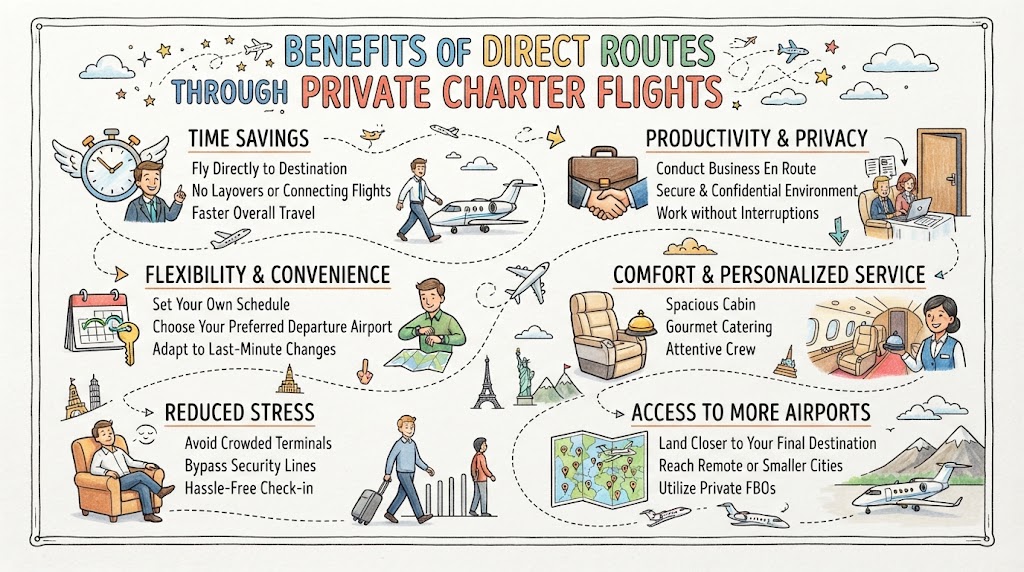
Major Benefits of Direct Routes Through Private Charter Flights
1. Improved Time Efficiency
Time is one of the most valuable resources for business professionals.
Traditional travel may involve:
- Connecting flights
- Long layovers
- Waiting periods
- Additional airport transfers
Direct private charter routes help reduce unnecessary travel complexity by allowing a more customized journey.
Potential benefits include:
- Better schedule control
- More efficient trip planning
- Reduced connection dependency
- Improved use of travel time
The actual time advantage depends on the route, aircraft, and operational conditions.
2. Increased Business Productivity
Travel time can become valuable working time when executives have access to a private cabin environment.
During a charter flight, passengers may be able to:
- Review documents
- Prepare presentations
- Conduct private discussions
- Plan business strategies
- Communicate with teams
A private aircraft environment can provide a more suitable setting for business activities compared with crowded public travel environments.
3. Access to More Airports
One major advantage of private aviation is access to a broader range of airports.
Smaller airports can provide:
- Closer access to business locations
- Reduced ground transportation time
- Easier regional travel planning
For companies visiting multiple facilities or regional markets, airport flexibility can improve overall travel efficiency.
4. Greater Schedule Flexibility
Business plans can change quickly.
Private charter flights allow companies to design travel schedules around their priorities instead of adapting entirely to airline availability.
Examples include:
- Same-day business trips
- Multiple meetings in different cities
- Time-sensitive executive travel
- Customized departure arrangements
5. Enhanced Privacy and Confidentiality
Business executives often discuss sensitive information involving:
- Corporate strategies
- Investments
- Partnerships
- Client relationships
A private charter aircraft provides a controlled environment where passengers can conduct conversations with greater privacy compared with public transportation.
While no travel method can guarantee complete confidentiality, private aviation offers a more discreet setting.
6. Better Support for Multi-City Business Travel
Many corporate trips involve visiting several locations within a short timeframe.
Private charter routes can support complex itineraries by allowing businesses to plan travel around multiple destinations.
Benefits include:
- Efficient scheduling
- Reduced travel interruptions
- Better meeting coordination
- Improved itinerary management
7. Improved Comfort and Convenience
Private charter travel provides a more personalized experience.
Depending on aircraft type and service arrangements, passengers may benefit from:
- Comfortable cabin environments
- Personalized travel planning
- Reduced airport congestion
- More convenient boarding processes
The focus is on creating a travel experience designed around passenger requirements.
Private Charter Direct Routes vs Commercial Airline Routes
| Feature | Private Charter Direct Routes | Commercial Airline Routes |
|---|---|---|
| Route Planning | Customized based on requirements | Fixed airline network |
| Scheduling | Flexible planning | Fixed departure times |
| Connections | Often reduced | May require connections |
| Airport Options | More airport flexibility | Mainly major airports |
| Passenger Control | Higher customization | Standardized service |
| Privacy | More controlled environment | Shared passenger environment |
| Business Productivity | Better workspace options | Limited workspace |
| Multi-City Trips | Easier customization | More complex planning |
| Boarding Experience | More personalized | Standard procedures |
| Travel Planning | Customized support | Passenger-managed planning |
| Group Travel | Private group arrangements | Separate seat bookings |
| Destination Flexibility | Depends on aircraft and airports | Depends on airline routes |
| Ground Transportation | Can be optimized | Often requires additional planning |
| Cabin Environment | Private setting | Public environment |
| Overall Experience | Business-focused | Mass transportation model |
Business Situations Where Direct Charter Routes Provide Value
Executive Meetings
Executives often need to attend important meetings across different locations. Direct charter routes can help create more efficient schedules.
Investor and Partner Meetings
Private travel can support time-sensitive business discussions by providing flexible scheduling options.
Facility and Site Visits
Companies with operations across multiple regions may benefit from easier access to locations near smaller airports.
Corporate Events
Leadership teams traveling to conferences, meetings, or company events can coordinate transportation more effectively.
International Business Travel
For certain routes, private aviation can provide customized travel solutions where airline schedules may not match business requirements.
Factors That Influence Private Charter Route Planning
Direct charter routes depend on several operational factors.
Aircraft Capability
Aircraft selection depends on:
- Distance requirements
- Passenger numbers
- Baggage needs
- Performance capabilities
Airport Availability
Not every airport can support every aircraft type.
Considerations include:
- Runway capability
- Airport operating hours
- Infrastructure
- Local regulations
Weather Conditions
Weather can influence:
- Departure timing
- Routing decisions
- Airport selection
Safety remains the primary factor in all flight planning decisions.
Operational Requirements
Professional charter providers evaluate:
- Flight permissions
- Crew requirements
- Aircraft availability
- Safety procedures
Choosing the Right Private Charter Provider
Selecting a reliable charter provider is an important part of successful private travel planning.
Companies should consider:
Safety Standards
Review the provider’s commitment to aircraft safety, maintenance, and operational procedures.
Aircraft Availability
A suitable aircraft selection helps match travel needs with appropriate solutions.
Aviation Experience
Experienced providers understand complex travel requirements and operational planning.
Customer Support
Clear communication helps ensure smooth travel coordination.
Route Planning Expertise
A knowledgeable provider can help identify efficient travel options.
Common Misconceptions About Direct Private Charter Flights
“Private Charter Flights Are Only About Luxury”
Private aviation also provides practical business benefits such as flexibility, productivity, and efficient scheduling.
“Private Flights Always Cost Less”
Private charter value depends on factors such as passengers, route requirements, aircraft type, and business objectives.
“Every Destination Has a Direct Private Route”
Route availability depends on aircraft capabilities, airport infrastructure, regulations, and operational factors.
“Private Aviation Removes Every Travel Challenge”
Private flights improve flexibility but still require proper planning and consideration of operational requirements.
How Businesses Can Optimize Private Charter Travel
Companies can improve their charter experience by:
- Planning travel requirements early
- Selecting suitable aircraft
- Communicating schedule priorities
- Understanding route limitations
- Working with experienced aviation providers
- Considering passenger needs
Effective planning helps maximize the value of private aviation.
Future of Private Charter Route Planning
Private aviation continues to evolve through:
- Improved digital booking platforms
- Advanced flight planning technology
- More efficient aircraft designs
- Better operational analytics
- Sustainable aviation developments
Technology will continue improving how businesses plan and manage private travel.
Frequently Asked Questions
1. What are direct routes through private charter flights?
Direct routes are customized flight paths designed to take passengers between locations with minimal interruptions based on aircraft and operational availability.
2. How are private charter routes different from airline routes?
Private charter routes are customized around passenger needs, while airline routes follow fixed schedules and networks.
3. Do private jets always fly nonstop?
Not always. Nonstop capability depends on aircraft range, destination distance, weather, and operational factors.
4. Why do businesses prefer direct charter flights?
Businesses often choose direct charter flights for flexibility, productivity, privacy, and improved travel planning.
5. How do private flights save travel time?
They may reduce connection requirements and provide better scheduling flexibility, depending on the journey.
6. Can private aircraft use smaller airports?
Many private aircraft can access a wider range of airports, but availability depends on aircraft and airport capabilities.
7. Are direct charter routes useful for multi-city trips?
Yes. Private charter planning can support customized multi-location business itineraries.
8. What affects private flight route availability?
Factors include aircraft type, airport facilities, weather, regulations, and operational planning.
9. Are private charter flights suitable for corporate travel?
Yes. Many organizations use private aviation for executive travel, meetings, and specialized business requirements.
10. How do companies select a private charter provider?
Companies should evaluate safety practices, experience, aircraft options, communication, and operational support.
Conclusion
Direct routes through private charter flights provide businesses and travelers with a more flexible approach to modern air transportation. By reducing unnecessary connections, improving scheduling options, and providing access to a wider range of airports, private aviation can help executives manage their time more effectively.
The value of private charter travel goes beyond convenience. It supports productivity, privacy, and customized travel planning for individuals and organizations with demanding schedules. However, successful charter travel depends on careful planning, suitable aircraft selection, and experienced aviation support.

